A Moongazer’s Guide
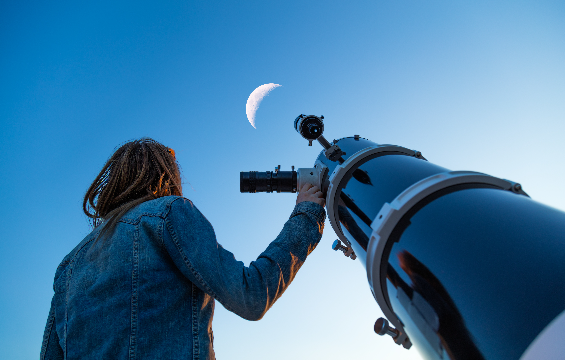
Throughout history and all around the world, humans have looked up at the Moon, spotting features and phenomenon and telling stories about what they see.
Faces of the Moon
What do you see when you look at the Moon?
When you look up at the Moon, your brain tries to make sense of its light and dark features by finding familiar shapes and patterns. This phenomenon is called pareidolia and it’s the same thing that happens when we see shapes in clouds (or a piece of toast!).
The Moon’s features have inspired different perspectives and legends all over the world. In North America, some traditions see a face of a man in the Moon. In some East Asian storytelling, a rabbit lives on the Moon. Other cultures see familiar figures and shapes influenced by their own traditions and stories.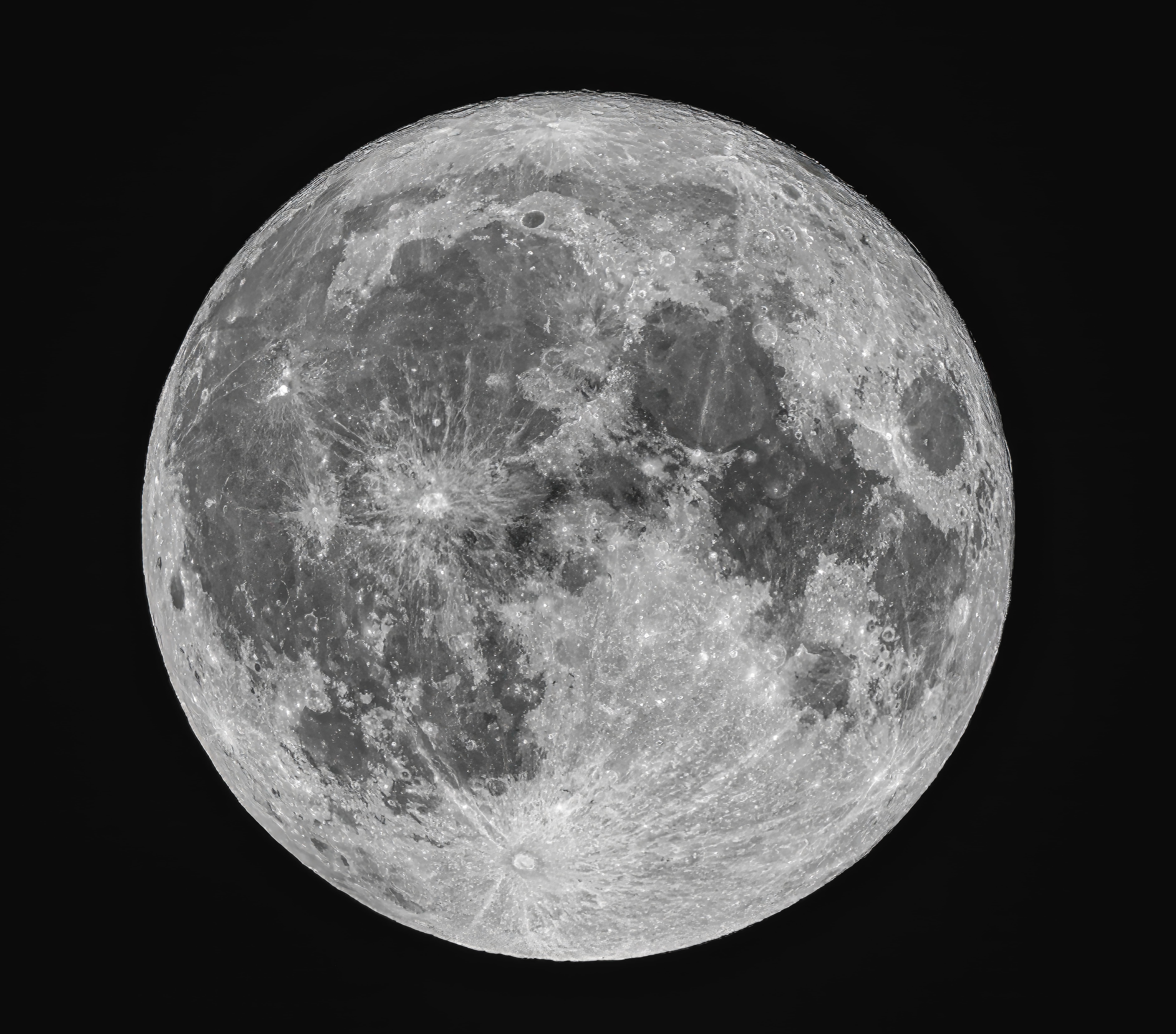
Take a look! What patterns do you see on the Moon?
Did you know?
We always see the same face of the Moon because it rotates around its axis at the same rate as it orbits around the Earth.
Lunar Phases
The Moon does not produce its own light—it reflects sunlight. As it orbits Earth, the angle of reflected light changes. These changes in the Moon's appearance are known as lunar phases.
There are eight named phases in a lunar cycle. Waxing refers to increasing illumination—during this phase, the Moon looks like it’s getting bigger. During waning, illumination decreases and it seems like each night the Moon gets a little bit smaller.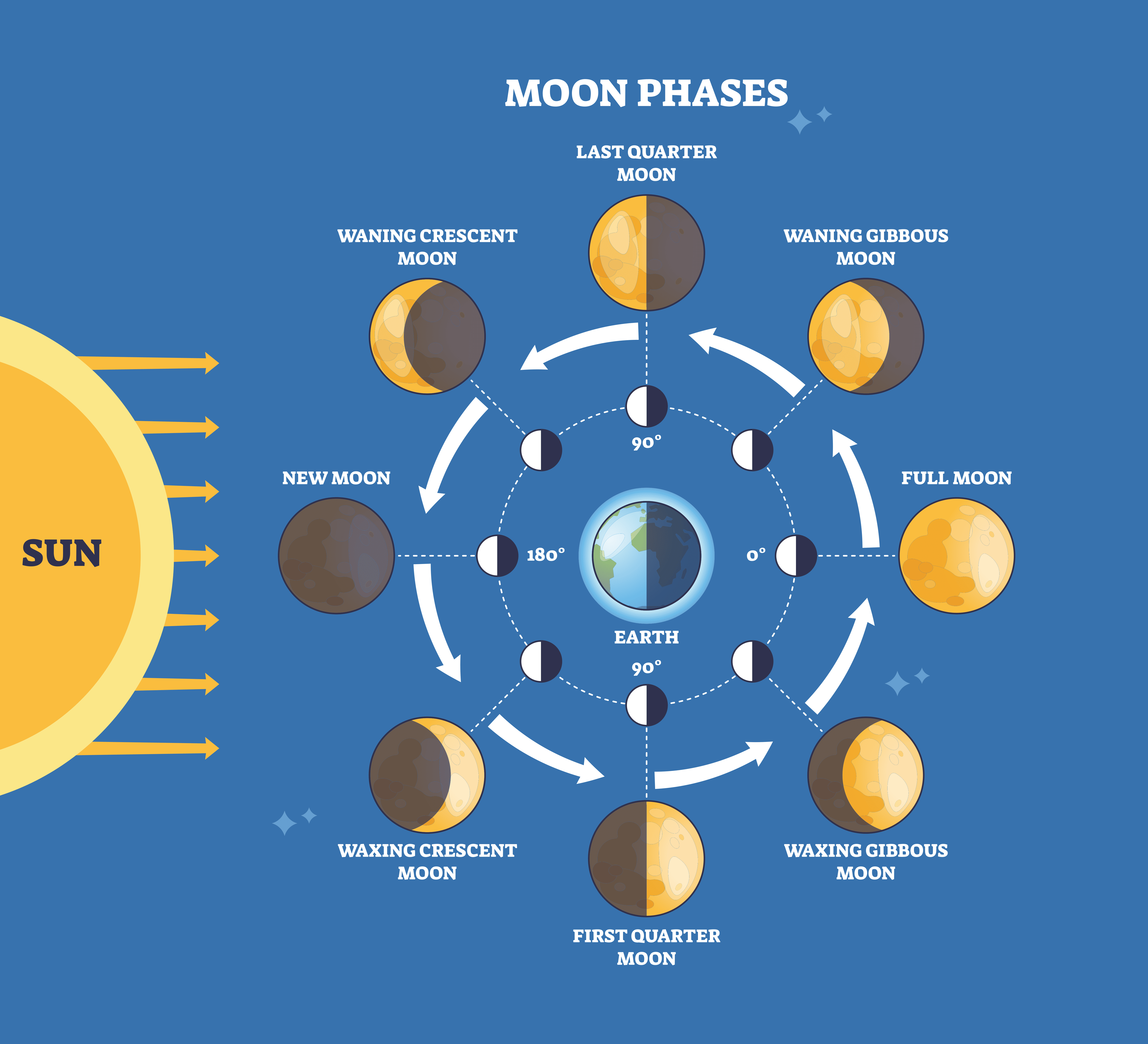
Even when the Moon is brightly lit by the Sun, we can still see its unlit parts thanks to earthshine. This dim glow is created when sunlight reflects off the Earth’s surface and onto the Moon.
Next time you’re outside, look up! Try to spot the Moon in the daytime sky. You'll notice that it is lit on the same side that the Sun is on. If the right side of the Moon is bright, look for the Sun to be on its right (and vice versa).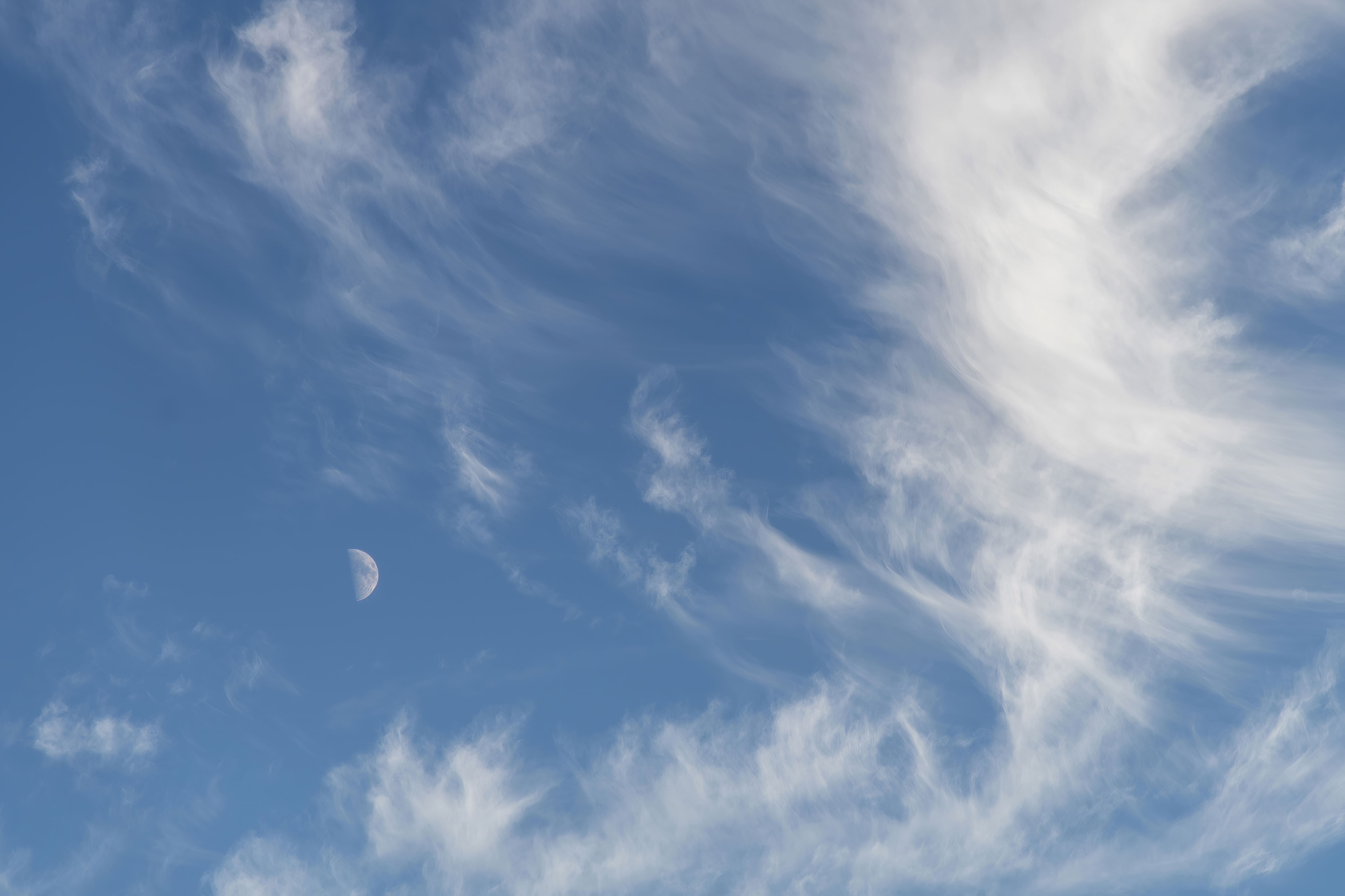
Eclipses
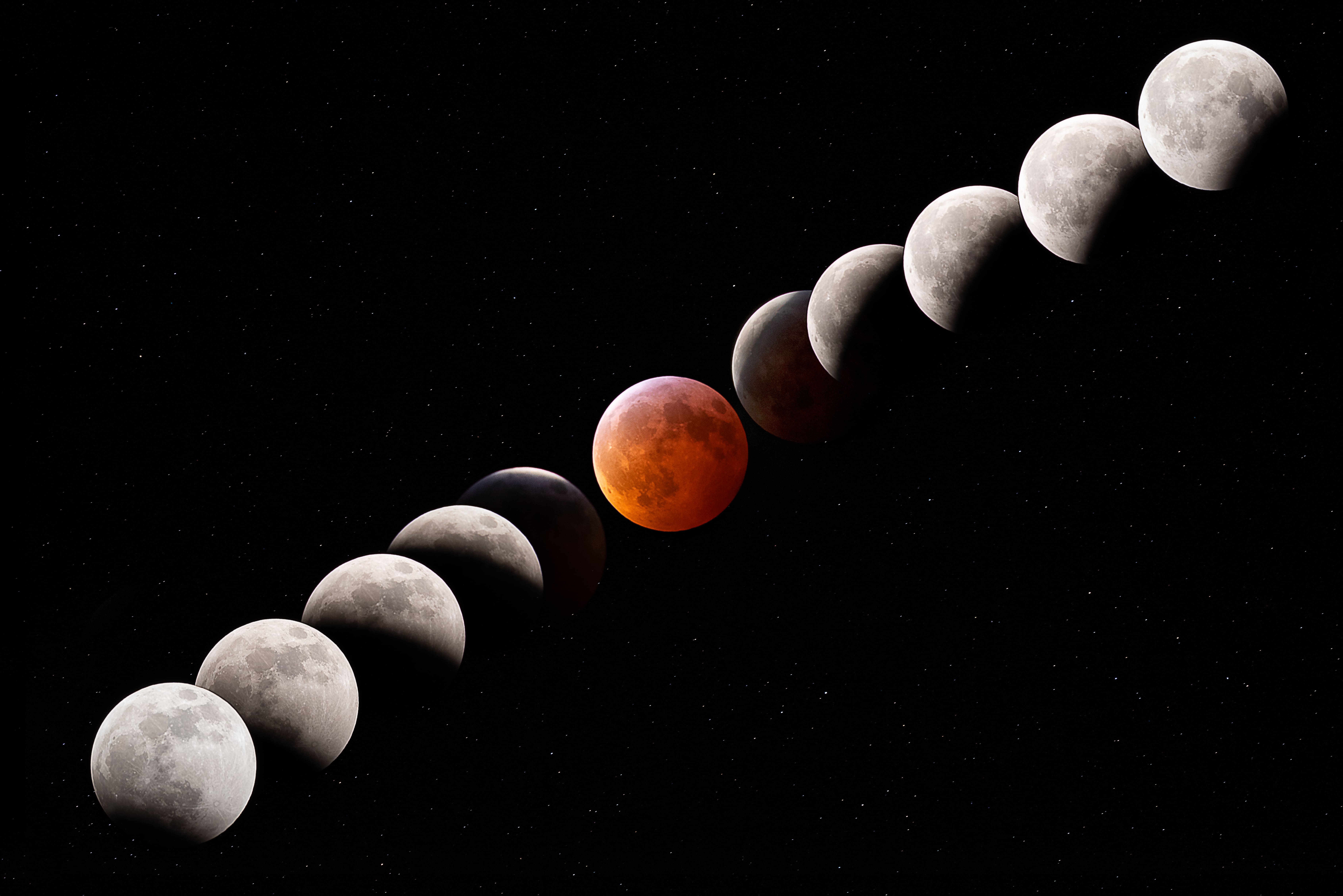
A lunar eclipse happens when the Earth passes between the Moon and the Sun. As the full Moon moves into the Earth’s shadow, the sunlight filters through the Earth’s atmosphere before hitting it, turning it a dark red colour.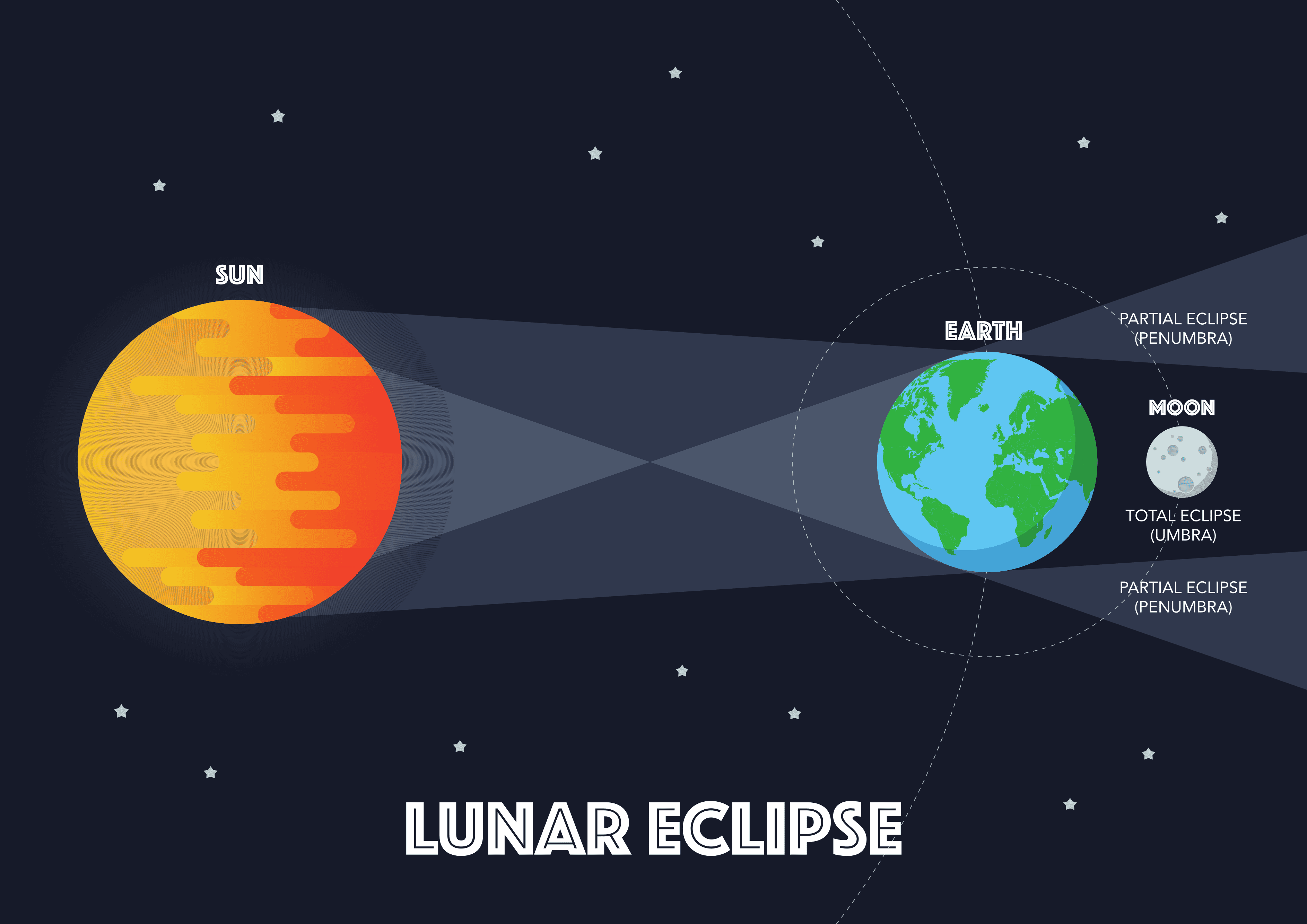
In contrast, a solar eclipse happens when the Moon passes between the Earth and the Sun, blocking all or part of the Sun from view and casting a shadow on a specific part of the Earth.
Since the Moon's orbit around the Earth is tilted by approximately 5 degrees from the Earth's orbit around the Sun, eclipses only happen when the Earth, Moon and Sun are lined up just right.
Mark your calendar: Keep your eyes on the Moon in 2026! There will be two lunar eclipses plus a solar eclipse, too.
- March 3, 2026 - Total Lunar Eclipse – Peak 6:33 a.m.
- August 12, 2026 – Partial Solar Eclipse – Peak 1:40 p.m.
- August 27-28, 2026 – Partial Lunar Eclipse – Peak 10:33 p.m.
(Viewing times are for Toronto. Times in other locations will vary.)
Supermoons
Sometimes the Moon is closer to the Earth, but this change usually isn’t noticeable to the human eye. When this happens during a full Moon, it’s called a supermoon. The supermoon can shine up to 30% brighter, making for a stunning sight.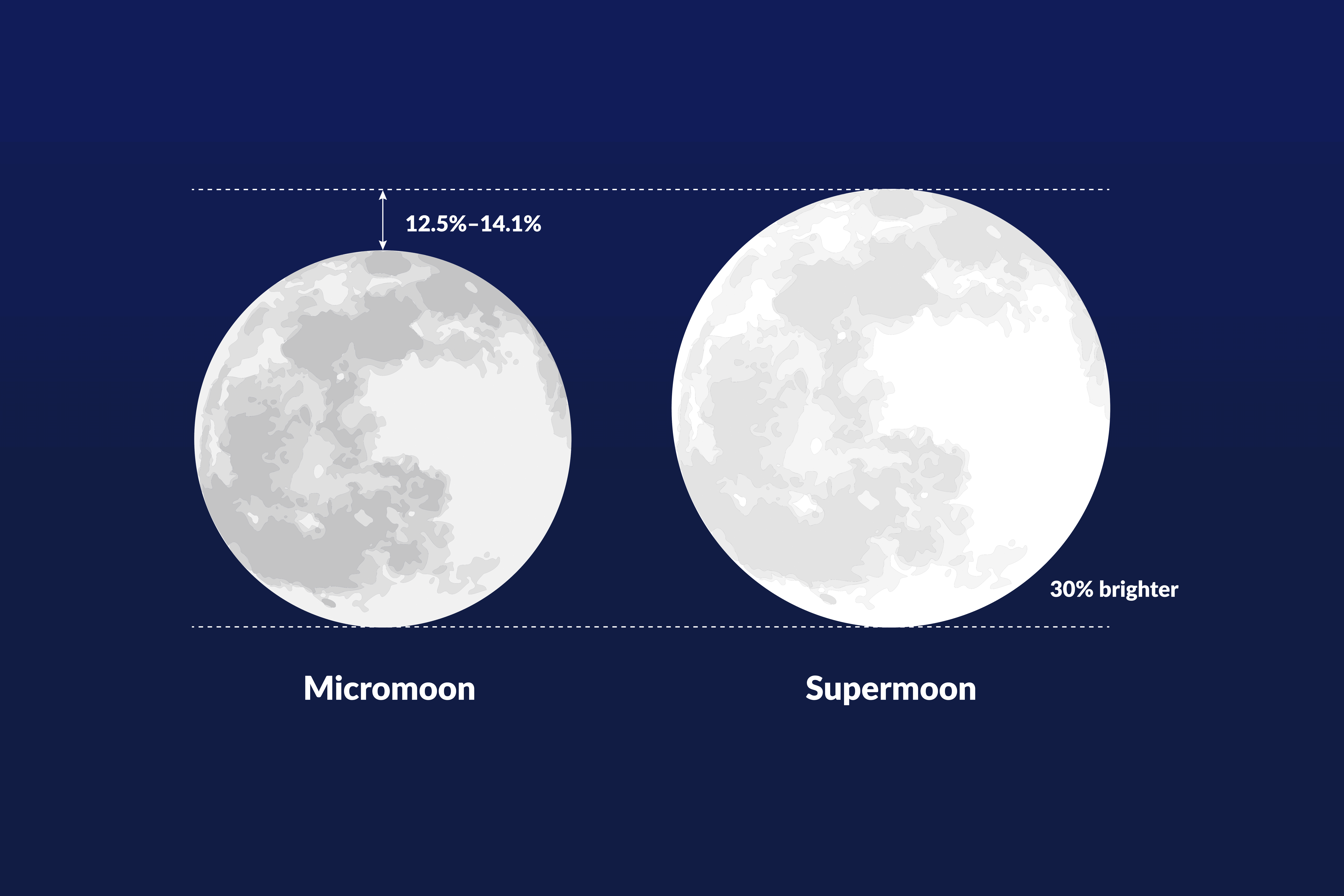
Did you know?
The Moon looks much bigger when it is near the horizon. This is called the Moon illusion. We know this illusion is related to how our brains process visual information but beyond that we still don’t entirely understand why it happens!
See for yourself! Hold up your pinky finger at arm’s length and compare the size of the Moon to your fingernail—they’ll match in size no matter where the Moon is in the sky. Or, if you’re flexible, bend over and look at the Moon backwards between your legs!